Onlays

A lab-made restoration that sits between a filling and a crown, rebuilding strength and bite while keeping more of your own tooth intact.

🦷

Tooth Preserving

Far less of the tooth is removed than for a crown.

Natural Look

Porcelain and composite finishes that go unnoticed.

💪

Strong & Durable

Individually made to take years of chewing.

Precise Fit

Laboratory-made for a precise, comfortable fit.

Book an onlay consultation

Ask our team whether an inlay or onlay would suit your tooth.

The Middle Ground Between a Filling and a Crown

When a filling isn't enough but a crown isn't needed.

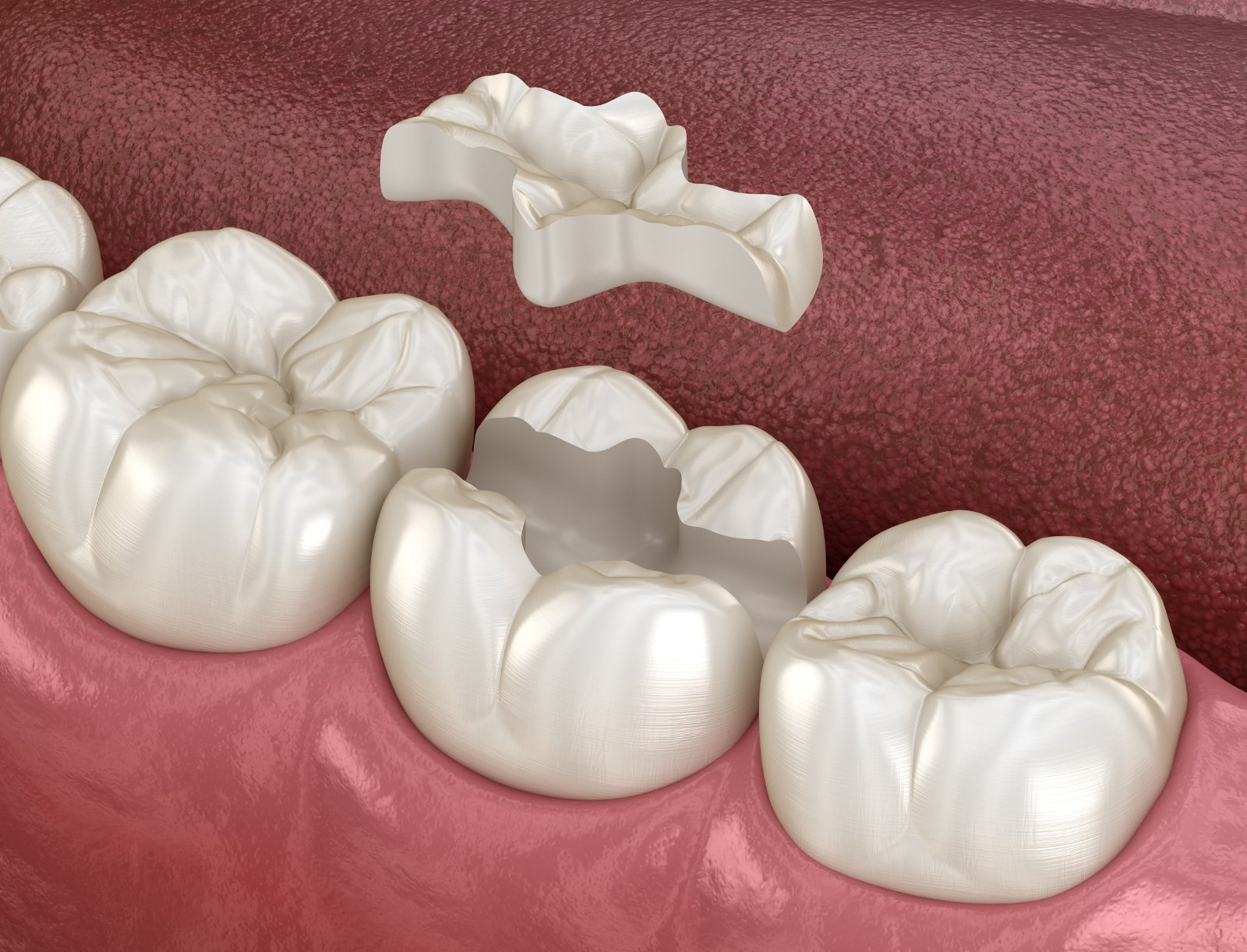
Sometimes a back tooth has lost too much structure for a straightforward filling to hold, yet still has plenty of healthy tooth left, more than enough to make a full crown unnecessary. This is exactly where inlays and onlays come into their own. Made in a laboratory and bonded over the biting surface and cusps, they restore the tooth’s strength, shape and bite while keeping as much of the natural tooth as possible.
What Is an Onlay?

An onlay is a precision restoration, made to measure in a dental lab, that fits over the biting surface of a back tooth. Where a crown encases the whole tooth down to the gum, an onlay rebuilds only the portion that genuinely needs it, which is why it is sometimes described as a partial crown. An inlay is the close cousin that sits within the tooth rather than over a cusp.

Materials

Inlays and onlays are most often made from one of three materials:

Composite Resin

A tooth-coloured option that sits quietly alongside your natural teeth, striking a sensible balance between looks and function.

Porcelain / Ceramic

The best blend of beauty and strength, hard-wearing and lifelike, and our usual choice where the tooth shows when you smile.

Gold

The traditional, supremely durable choice, often preferred for molars where sheer longevity matters most.


We will suggest the right material for you, weighing up where the tooth sits, how hard it has to work and how you would like it to look.

When Are Onlays Suitable?

An inlay or onlay is often the answer when:

  • Decay or a failing old filling is sizeable, yet the walls of the tooth remain strong
  • One cusp has broken away but the remainder of the tooth is healthy
  • A large existing filling is wearing out and deserves something sturdier
  • You would rather keep more natural tooth than a crown would allow

Where a tooth is more severely broken down, a crown is likely the wiser choice, and for a small cavity an everyday filling will do the job. Inlays and onlays neatly fill the gap in between.

The Process

The work usually spans two appointments:


1

We remove the damaged part of the tooth, take a digital or conventional impression, and fit a temporary covering to protect it.

2

Your made-to-measure restoration is tried in, checked for fit and bite, then securely bonded in place.


Every Netherton Dental Practice onlay is crafted by a UK dental laboratory, so you get the finest materials and an exact, well-fitting result.

How Long Do They Last?

Looked after well and reviewed regularly, an onlay will commonly serve for 10 to 15 years, and gold or premium ceramic often lasts longer still.

  • Brush and clean between your teeth every day
  • Steer clear of biting hard objects such as ice, pens or nutshells
  • Wear a night guard if you tend to grind
  • Keep up with your routine check-ups

Treatment Options

Private

High-quality inlays and onlays in ceramic, composite or gold are provided privately, and we will go through every option and the costs with you before any treatment begins.

See our Fees page for current pricing.

Ready to discuss onlays?

Talk to Netherton Dental Practice about rebuilding your tooth while holding on to as much natural structure as we can.

☎︎ Call 01508 532226

Inside Netherton Dental Practice

📍 Visit Our Practice

Netherton Dental Practice
The Plain, Long Stratton,
Norwich, NR15 2XG

Get directions →